How To Get More Fat On Carnivore Diet: Best Guide For 2026
Getting more fat on a carnivore diet comes down to choosing fattier cuts of meat, adding animal fats like butter and tallow, and eating until you feel fully satisfied.
If you've been eating only lean meats and feeling tired, hungry, or stuck, the fix is almost always the same: more fat. On a carnivore diet, fat isn't just a bonus. It is your main source of fuel, energy, and hormones. Let me show you exactly how to get more fat on carnivore diet without feeling overwhelmed or lost at the meat counter.
I remember when I first started carnivore, I loaded up on chicken breast and ground turkey because I thought lean protein was the "healthy" choice. I felt hungry every two hours, my energy tanked by mid-afternoon, and I almost quit the whole thing. The day I switched to ribeye, added butter to my coffee, and started eating the fat cap on my steak was the day everything changed. That personal shift is exactly why I wrote this guide. I want to save you the trial and error I went through.

Why Fat Matters So Much on a Carnivore Diet
Fat is not the enemy here. On carnivore, fat is your primary energy source. Your body uses it to fuel everything from brain function to hormone production. When you don't eat enough fat, you'll feel foggy, cold, hungry, and cranky no matter how much steak you eat.
Think of fat as the gas in your car. Protein is the engine, but fat is the fuel that actually makes you go. Without enough of it, you're just spinning your wheels.
Here is what adequate fat does for you on carnivore:
- Provides steady energy throughout the day
- Supports healthy hormone balance
- Helps you feel full and satisfied after meals
- Makes vitamins and minerals from meat more absorbable
- Keeps your body warm and metabolism humming
If you want to lose fat, gain muscle, or just feel better, fat is non-negotiable.
Best Fatty Cuts of Meat to Eat
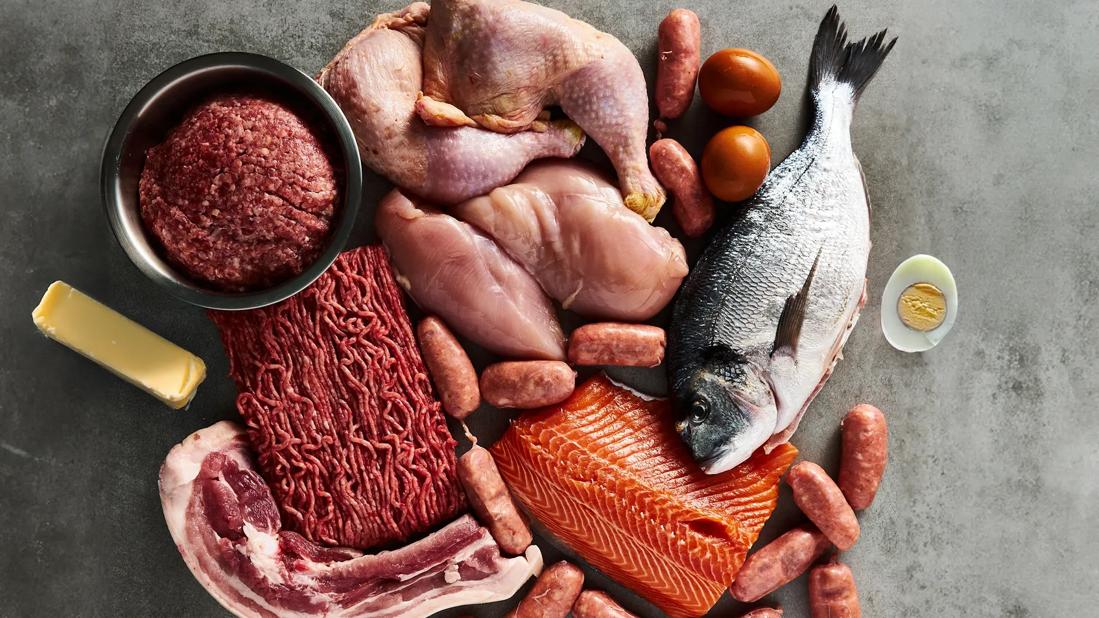
The easiest way to get more fat on a carnivore diet is to choose fattier cuts at the grocery store or butcher. Not all meat is created equal, and the fat content can vary wildly.
Here are the top fatty cuts to focus on:
- Ribeye steak
- Chuck roast
- 80/20 ground beef
- Pork belly
- Bacon (uncured if possible)
- Lamb shoulder
- Duck (with skin)
- Salmon (wild caught if available)
- Pork shoulder
- Beef short ribs
When I switched from sirloin to ribeye, the difference in satiety was shocking. One ribeye kept me full for six hours. Two chicken breasts would leave me snacking an hour later. The fat content made all the difference.
How Much Fat Should You Eat Per Day on Carnivore
There is no single magic number, but most people thrive on a ratio of about 70% fat to 30% protein by calories. If you eat 2,000 calories a day, that means roughly 1,400 calories from fat, which equals about 155 grams of fat.
A simple way to think about it:
- Eat 1 gram of fat for every 1 gram of protein as a starting point
- Adjust up or down based on your energy, hunger, and goals
- If you're hungry, eat more fat, not more lean meat
If you want a quick visual, picture a plate that's about two-thirds fat and one-third protein. That's the rough goal for most carnivore eaters.
Add Pure Animal Fats to Your Meals
Sometimes the meat you buy just isn't fatty enough, and that's okay. You can easily add extra fat to your meals without changing what you eat.
Here are the best animal fats to use:
- Grass-fed butter (my personal favorite)
- Beef tallow
- Pork lard
- Duck fat
- Ghee (clarified butter)
- Bone marrow
- Heavy whipping cream (if you tolerate dairy)
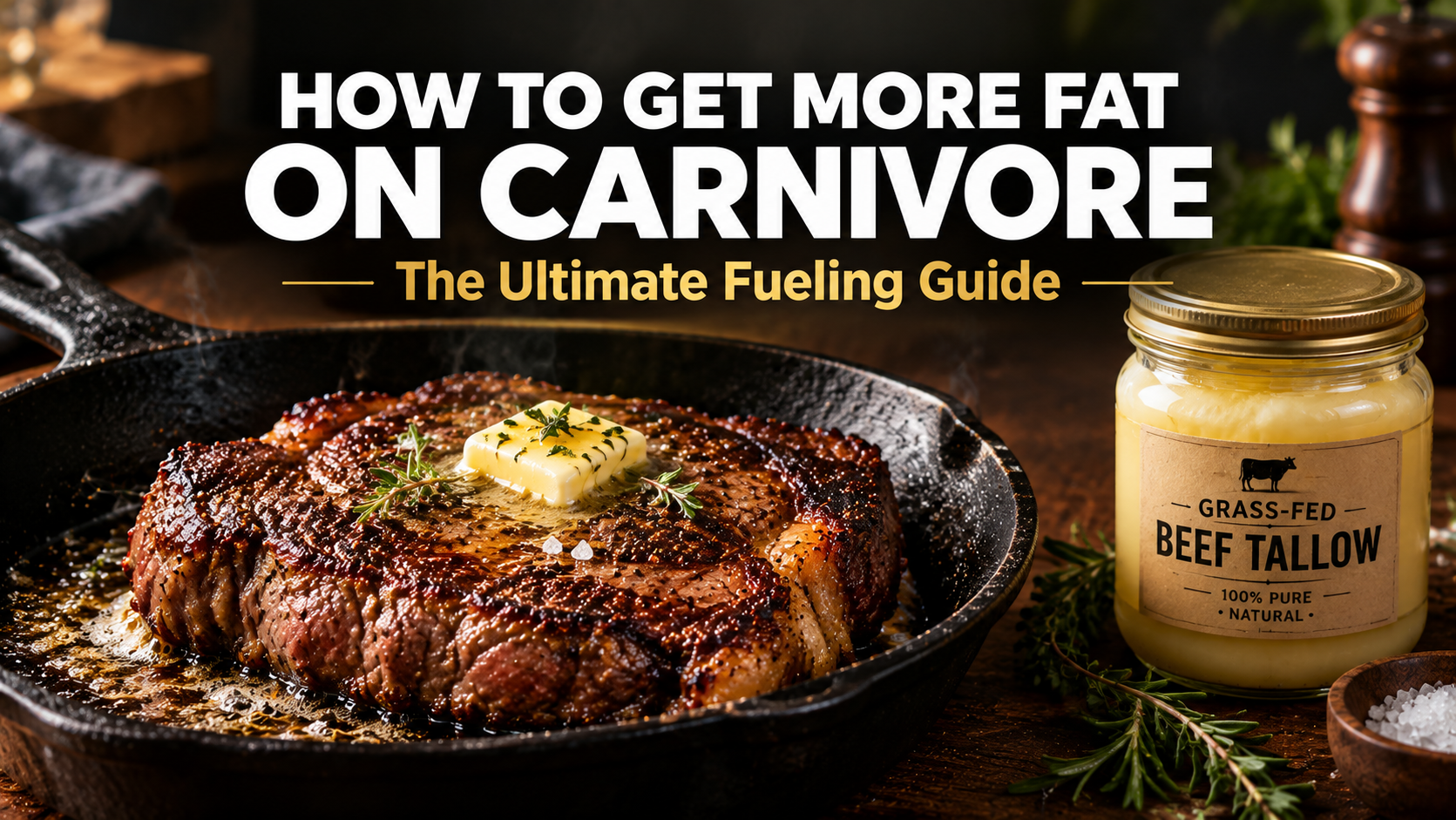
I keep a jar of beef tallow on my counter at all times. I melt a tablespoon onto my steak, my eggs, even my ground beef. It adds calories fast and makes everything taste better. You can render your own tallow from beef trimmings, which is cheap and rewarding.

Eat the Fat, Don't Trim It
This sounds obvious, but it's a mistake I see all the time. People buy a beautiful ribeye and then cut off the fat cap because they think it's "unhealthy." On carnivore, that fat is pure gold.
Always eat the fat on your steak. Render the fat from your bacon and use it to cook your eggs. Save the fat from your ground beef and drink it. These small habits add up to hundreds of extra fat calories per day without you even trying.
If you struggle with the texture of solid fat, try slow-cooking your meats. A chuck roast cooked low and slow becomes melt-in-your-mouth tender, and the fat blends right into the meat.
Use Dairy Fats If You Tolerate Them
Not everyone does well with dairy on carnivore, but if you tolerate it, dairy fats are an easy way to boost your intake.
- Heavy cream in your coffee (also called bulletproof coffee)
- Butter melted over steak
- Full-fat cheese (if you include cheese in your version of carnivore)
- Sour cream as a dip for cooked meats
- Ghee for cooking at high heat
Bulletproof coffee was a game-changer for me. One cup with a tablespoon of butter and a tablespoon of heavy cream gives me around 200 calories of pure fat and keeps me full until lunch.
Cook With Fat Instead of Dry Methods
How you cook your meat matters just as much as what you cook. Dry cooking methods like grilling or broiling can leave your meat lean and dry, even if you started with a fatty cut.
Try these fat-friendly cooking methods:
- Pan-searing in tallow or butter
- Slow-cooking or braising
- Roasting with the skin on
- Sous vide followed by a fat sear
- Cooking ground beef without draining the fat
I almost always pan-sear my steaks in butter now. I drop a couple tablespoons in the pan, let it foam, and baste the steak with the melted butter as it cooks. The flavor is unreal, and the fat content skyrockets.
Track Your Macros for the First Few Weeks
You don't have to track forever, but spending two or three weeks logging your food in an app like Cronometer can be eye-opening. Most people are shocked to find out they're eating way more protein than fat without realizing it.
When I tracked mine, I was at about 60% protein and 40% fat. No wonder I was hungry. I slowly flipped that ratio by adding butter, tallow, and fattier cuts until I hit that 70/30 sweet spot.
Once you get a feel for portion sizes and fat ratios, you can stop tracking and just go by how you feel.
Common Mistakes That Keep You From Getting Enough Fat
Even with the best intentions, it's easy to fall into habits that keep your fat intake too low. Watch out for these common mistakes:
- Choosing chicken breast over chicken thighs
- Buying extra lean ground beef (90/10 or leaner)
- Trimming visible fat off your steaks
- Skipping egg yolks
- Cooking with non-stick spray instead of butter or tallow
- Eating protein shakes or bars instead of whole fatty meats
Fix these one at a time, and you'll notice a difference within days.
Adjust Based on Your Goals
Not everyone needs the same amount of fat. Your ideal ratio depends on what you're trying to achieve.
If you want to lose body fat, keep your protein moderate and your fat high. This keeps you full and lets your body tap into stored fat for energy.
If you want to gain muscle, you'll need a bit more protein, but fat should still be your main calorie source. Don't fall into the bodybuilding trap of eating only chicken and egg whites. That's a recipe for burnout on carnivore.
If you want to maintain your weight, eat to satiety and let your body guide you. You'll naturally settle into the right ratio.
How to Know If You're Eating Enough Fat
Your body is great at telling you when something is off. Watch for these signs that you need more fat:
- Constant hunger between meals
- Feeling cold all the time
- Low energy or brain fog
- Poor sleep
- Cravings for carbs or sugar
When I upped my fat intake, all of these issues vanished within a week. My sleep got deeper, my energy stabilized, and the cravings I'd been fighting for months completely disappeared.
Snack on Fat Between Meals If Needed
Some people do well with three square meals a day. Others need a little something in the afternoon. If that's you, keep carnivore-friendly fat snacks on hand.
- Hard-boiled eggs (eat the yolks)
- Pork rinds
- Beef jerky with high fat content
- Bone marrow
- Cooked bacon straight from the fridge
- Small pieces of ribeye
I keep a bag of pork rinds in my pantry for emergencies. They're crunchy, salty, and almost pure fat.
Frequently Asked Questions
Can you eat too much fat on a carnivore diet?
Yes, it is possible, though rare. If you eat way more calories than your body needs, even from fat, you can still gain weight. Listen to your hunger cues and adjust portions based on your goals and activity level.
What is the best fat source for carnivore beginners?
Grass-fed butter and beef tallow are the easiest and most versatile. They taste great, melt easily, and pair well with almost any meat. Start there and branch out as you get comfortable.
Is saturated fat safe on carnivore?
Current evidence suggests that saturated fat from whole food sources is not the heart disease risk it was once thought to be. For most people, especially on a low-carb diet like carnivore, saturated fat is well tolerated and used efficiently for energy.
How long does it take to feel better after increasing fat?
Most people notice a difference within three to seven days. Energy, mood, and sleep tend to improve first, followed by reduced hunger and cravings. Give it at least two weeks before making any big adjustments.
Do I need to count macros forever?
No. The first few weeks of tracking are just to educate you on portions and ratios. After that, you can eat intuitively based on hunger, energy, and how you feel.
Summary
Getting more fat on a carnivore diet doesn't have to be complicated. Focus on fatty cuts of meat like ribeye and 80/20 ground beef, cook with butter or tallow, eat the fat instead of trimming it, and don't be afraid to add extra animal fats to every meal. Track your macros briefly to learn the ropes, then trust your body to guide you. Before long, you'll have the energy, satiety, and results you've been looking for.
Try swapping just one lean meal a day for a fatty one this week and see how you feel. Drop a comment below with your favorite fatty cut or your go-to way to add extra fat to meals. I'd love to hear what's working for you.