How much sugar can you have on the keto diet
How much sugar can you have on the keto diet? Most people can stay in ketosis with under 20 to 50 grams of total carbs per day, and that cap covers every form of sugar combined. As of 2026, the Academy of Nutrition and Dietetics still backs this threshold as the standard for a well-formulated ketogenic diet.
A single teaspoon of white sugar contains about 4 grams of carbs, so even a small treat can eat into your daily budget fast. The trick is knowing which sugars count, which ones don't, and where they hide. Let's break that down so you can track your intake without the guesswork.

Quick Answer
Most keto eaters should keep total carbs under 20 to 50 grams per day. All sugars count toward that limit. Aim for less than 5 grams of added sugar daily.
Natural sugars in whole foods count too. Track every source, not just sweets.
Why Sugar Limits Matter on Keto (and What Happens If You Overdo It)
Sugar and ketosis don't mix well. When you eat more carbs than your body can burn, it breaks ketosis and switches back to glucose for fuel. You'll often feel this as a stalled scale, brain fog, or that familiar carb craving creeping back.
The science is straightforward. Ketone production in the liver drops when blood glucose climbs. Insulin rises to clear that glucose, and your body parks fat burning for later.
That's why even small sugar splashes can undo days of careful eating.
Our research across published nutrition guidance shows the same pattern: sugar is the fastest carb to spike blood glucose. It hits harder than complex carbs and clears faster, which means more frequent insulin swings. For anyone managing blood sugar, weight, or metabolic health, that volatility works against every goal keto is meant to support.
This matters even more for certain groups. People with type 2 diabetes using keto for glycemic control need tighter limits than someone just trying to lose a few pounds. The same goes for therapeutic keto used in epilepsy treatment, where precision is medical, not optional.
Total Carbs vs Net Carbs: The Real Number That Matters
Here's where most confusion starts. A food label lists total carbohydrates, but keto dieters usually count net carbs. Net carbs equal total carbs minus fiber minus most sugar alcohols.
That's the number that actually affects ketosis.
Fiber doesn't digest into glucose the way sugars and starches do. It passes through mostly intact. That's why a cup of raspberries (8 grams of total carbs, 6 grams of fiber) only "costs" you about 2 net carbs.
The USDA Dietary Guidelines treat fiber differently from sugars for this reason, and keto dieters have adopted the same logic.
Most people starting out use the simpler total carb count. Once you're comfortable with food labels, switching to net carbs gives you more flexibility and a wider range of vegetables, berries, and nuts. Both approaches work, as long as you're consistent.
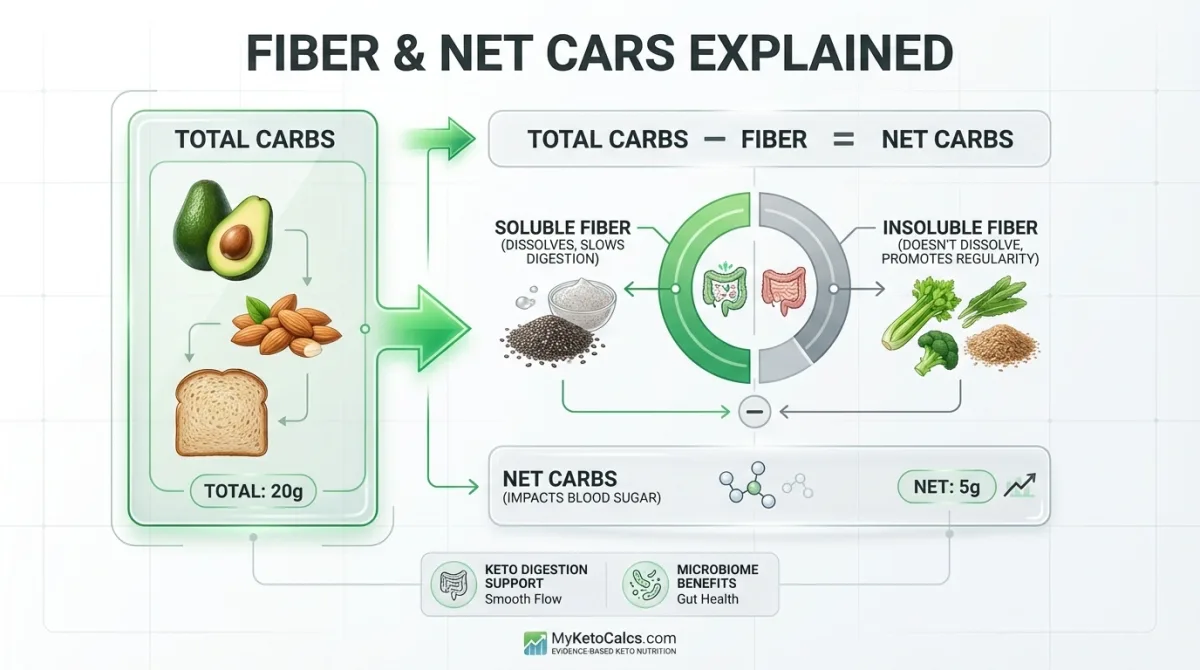
| Carb Type | Counts Toward Keto Limit? | Why |
|---|---|---|
| Total carbohydrates | Yes (the default method) | Includes every carb source on the label |
| Fiber | No (if tracking net carbs) | Doesn't raise blood glucose meaningfully |
| Sugar alcohols (erythritol, xylitol) | Usually no | Most don't spike insulin significantly |
| Allulose | No (FDA-exempt) | Behaves like fiber for blood sugar |
| Added sugars | Yes | Digests straight to glucose |
If you're managing diabetes or just want the strictest version, stick with total carbs. If you're healthy and looking for flexibility, net carbs give you more room without losing ketosis for most people.
The Standard Keto Sugar and Carb Threshold
The classic target for nutritional ketosis is 20 to 50 grams of total carbs per day, depending on your goal and activity level. Most of that allotment goes to vegetables, dairy, nuts, and small amounts of protein-carbs. Sugar gets very little room.
For most adults starting keto, 20 grams of total carbs daily is the safest bet. It's strict enough to trigger ketosis within 2 to 7 days and gives you a buffer for hidden sugars. After 4 to 6 weeks of stable ketosis, some people can bump up to 30 to 50 grams, especially active athletes or those closer to their goal weight.
Sugar fits inside that cap, not on top of it. If you're eating 25 grams of carbs from vegetables and dairy, you've got 5 to 25 grams left for everything else, including any added sugar. That sounds tight, and it is.
Most people on keto learn to treat sugar as a flavor accent, not a main ingredient.
The National Institutes of Health recommend that added sugars stay below 10% of total daily calories for the general population. On a 2,000-calorie diet, that's 50 grams. Keto automatically drops you well below that ceiling, which is one reason it's popular for blood sugar control.
Added Sugar vs Natural Sugar: What's Actually Different
Chemically, sugar is sugar. Your body breaks sucrose, fructose, and glucose down the same way. The difference on a label is about source, not impact.
Added sugars are the ones manufacturers put in during processing. Think cane sugar in your yogurt, high-fructose corn syrup in condiments, or honey in a "healthy" granola bar. The FDA has required a separate line for added sugars on Nutrition Facts panels since 2020, which makes tracking easier than ever.
Natural sugars show up in whole foods without human addition. The lactose in milk, the fructose in an apple, the small amount of sugar in a carrot. These still count toward your carb limit, but they come packaged with vitamins, minerals, and fiber that slow absorption.
Both raise blood glucose. Both break ketosis if you eat enough. But whole-food sugars are usually denser in nutrients, which matters when you're trying to hit your micronutrient goals on a restricted diet.
The American Heart Association's guidance on added sugars recommends keeping them to under 25 grams per day for women and 36 for men, well above what keto allows.
The practical takeaway: don't swap a candy bar for a bowl of fruit and call it equal. The fruit is better for you, but the carbs still count. For anyone focused on overall wellness, the right foods for vein health follow a similar logic: whole sources over refined ones, but the daily math still applies.
Hidden Sugars That Sneak Into Your Daily Count
This is where most keto beginners get tripped up. The obvious sugar in your coffee or dessert is easy to track. The sugar in your "sugar-free" ketchup, flavored yogurt, or protein bar is where the budget disappears.
Sugar goes by roughly 60 different names on ingredient labels. Common ones include maltodextrin, dextrose, sucrose, fructose, corn syrup, rice syrup, agave nectar, and "evaporated cane juice." Maltodextrin is particularly sneaky because it has a high glycemic index, higher than table sugar, despite being marketed as a complex carb.
Sauces and condiments are the worst offenders. A tablespoon of ketchup has about 4 grams of sugar. So does most commercial barbecue sauce, salad dressing, and teriyaki glaze.
"Sugar-free" doesn't always mean low-carb either. Many use maltodextrin or fruit juice concentrate as a substitute.
Dairy is another quiet sugar source. A cup of plain whole milk has 12 grams of natural sugar (lactose). Flavored yogurt can hit 15 to 20 grams per single-serving cup.
Even unsweetened almond milk often has a gram or two of added sugar for taste.
Here's a quick scan of where sugar hides:
- Salad dressings (especially balsamic and Catalina)
- Marinades and BBQ sauces
- Protein bars labeled "low-sugar"
- Flavored nuts and nut butters
- Smoothies and "green" drinks
- Coffee creamers (even the "natural" ones)
- Kombucha and flavored sparkling water
- Granola and "keto-friendly" cereals
Reading every ingredient list sounds tedious, and it is. But after a few weeks, you start recognizing the usual suspects. For anyone building a clean eating routine, a solid handle on the best green juice for gut health shares the same habit: scan the label, question the claims, and watch for the marketing tricks.
How Sugar Affects Ketosis and Blood Ketone Levels
Once you eat sugar, your blood glucose rises within minutes. Insulin follows to shuttle that glucose into your cells, and ketone production in the liver slows down. The clearer your ketones stay, the longer you stay in fat-burning mode.
Blood ketone meters show this in real numbers. Most people in nutritional ketosis read between 0.5 and 3.0 mmol/L. A single sugary snack can drop that number by 0.5 to 1.0 mmol/L within a few hours.
It usually climbs back once insulin drops and fat burning resumes, but repeated sugar spikes keep the cycle going.
This matters because ketone levels correlate with how "in" ketosis you feel. Energy, mental clarity, and reduced hunger all track with steady ketone production. Frequent sugar intake blunts that feedback loop, even if your total daily carbs technically stay under 50 grams.
Why timing matters too
Eating sugar with a high-fat meal slows absorption slightly. Eating it on an empty stomach causes a sharper spike. Neither is "good" on keto, but the timing affects how much damage a single mistake does to your ketone reading that day.
Sugar Alcohols and Keto Sweeteners: Do They Count?
Sugar alcohols are a different beast from regular sugar. Most of them (erythritol, xylitol, sorbitol) pass through your gut with minimal blood sugar impact. That's why they're popular in keto baking and "sugar-free" products.
Erythritol has effectively zero net carbs per gram. Your body doesn't metabolize it the way it does glucose. Xylitol sits around 2.4 calories per gram instead of sugar's 4, with a smaller insulin response.
Maltitol is the exception. It's still a sugar alcohol, but it spikes blood glucose more than the others, so most keto dieters treat it like regular sugar.
Stevia, monk fruit, and allulose are not sugar alcohols but they show up in the same products. Stevia and monk fruit are zero-calorie plant extracts. Allulose is a rare sugar that the FDA has exempted from the total and added sugar counts on Nutrition Facts labels, because it behaves like fiber in the body.
The practical cheat sheet:
| Sweetener | Net Carbs (per tsp) | Keto-Friendly? |
|---|---|---|
| Erythritol | 0 g | Yes |
| Stevia | 0 g | Yes |
| Monk fruit | 0 g | Yes |
| Allulose | 0 g (FDA-exempt) | Yes |
| Xylitol | 0.5 g | Yes, in moderation |
| Maltitol | 2 g | Treat like sugar |
If you're managing diabetes or doing strict therapeutic keto, even "zero-impact" sweeteners can be worth avoiding at first. They keep sweet cravings alive, and that often leads to real sugar slip-ups later. For anyone rebuilding dietary habits, a focused look at the top probiotics for acne and gut health shares the same root principle: cut the trigger, then rebuild.
How Much Fruit Sugar You Can Have on Keto
Fruit isn't off-limits, but it's limited. Whole berries are the safest bet because they're high in fiber and lower in sugar per cup. Blackberries, raspberries, and strawberries all fit a keto budget in small portions.
A half-cup serving of raspberries has about 2.5 grams of net carbs. The same portion of blackberries runs around 3 grams. Strawberries sit at about 4 grams of net carbs per half-cup.
Compare that to a half-cup of mango at 12 grams or banana at 17 grams, and the difference is stark.
Higher-sugar fruits like grapes, cherries, and pineapple should be treated like candy. They taste great, but they pack too many carbs per serving to fit most keto budgets. Dried fruit is even worse because the water is gone but the sugar stays, so a small handful carries the carb load of a whole piece of fresh fruit.
Smart fruit choices for keto
Stick with berries, in small portions. A few raspberries on top of Greek yogurt, a couple of blackberries in a salad, half a strawberry sliced into whipped cream. These add flavor and antioxidants without blowing your daily limit.
Fruit juice and smoothies don't count, even if they come from "real" fruit. The fiber gets stripped out and the sugar goes straight to your bloodstream. It's almost as bad as soda in terms of carb impact.
Safe Sugar Limits by Goal (Weight Loss, Maintenance, Athletic Performance)
Your carb tolerance shifts depending on what you're trying to achieve. Strict weight loss calls for the lowest sugar ceiling. Maintenance gives you more wiggle room.
Athletic performance often allows even more, as long as you time it right around training.
Most people chasing meaningful weight loss do best at 20 grams of total carbs daily for the first 8 to 12 weeks. Once your goal weight is within range, you can test bumping to 30 grams. Maintenance often lands between 30 and 50 grams of total carbs, with sugar kept under 5 grams.
Athletes on keto can sometimes push higher, especially during heavy training blocks. Carbohydrate tolerance rises when glycogen is being depleted daily. Some endurance athletes hold ketosis with 50 to 70 grams of total carbs, but timing matters.
Carbs around workouts get used for muscle fuel, not stored.
Reading Nutrition Labels for Sugar on a Keto Diet
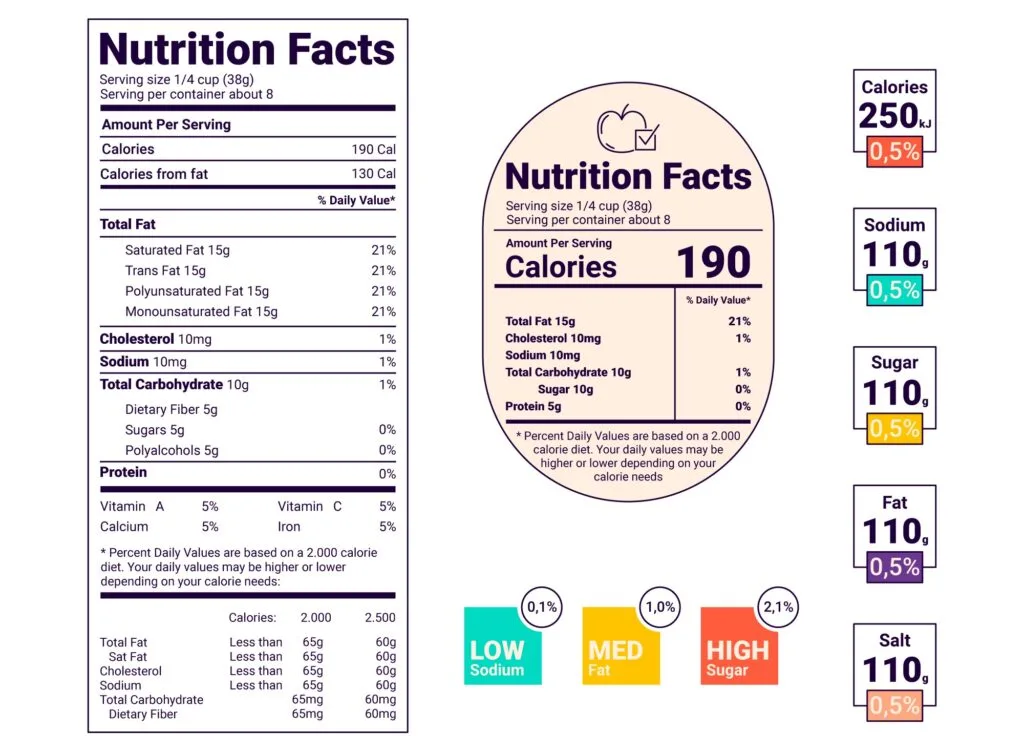
Start with the serving size. Everything on the label, including sugars, scales to that one portion. Then check total carbohydrates, then the added sugars line if it's listed.
The ingredient list catches what the numbers don't. Words ending in "-ose" are usually sugars. Syrups, nectars, and "juice concentrates" all count.
If sugar appears in the first three ingredients, the product almost certainly doesn't fit a keto budget.
Skip the marketing on the front. "Low sugar," "keto-friendly," and "no added sugar" are not regulated terms in most markets. The label and ingredient list are the only parts that matter.
Adjusting Your Sugar Intake Based on Ketone Testing Results
Testing strips and blood meters give you feedback that guessing never will. If your ketones drop after a food choice, that food was too high in carbs for your body. If they hold steady, you've found your personal limit.
Blood ketone meters are more accurate than urine strips, but they're also more expensive. Strips are cheaper and fine for weekly check-ins. Either way, you want a baseline reading after 7 to 10 days of strict keto, before you start adding back any "borderline" foods.
Once you have a baseline, use it as a guide. Try a small portion of something higher-carb, then test two hours later. If your ketones held within 0.2 mmol/L, that's probably a safe food for you.
If they dropped more than 0.5 mmol/L, cut it out and try again later.
Patience pays off here. Your carb tolerance can shift over time. After 6 to 12 months of consistent keto, some people find they can handle slightly more carbs without losing ketosis.
Others stay strict at 20 grams forever and that's fine too. The data from your own meter beats any generic guideline. For anyone working on broader wellness goals, a smart look at the top herbs for vaginal health follows the same principle: track, measure, and adjust based on your own results, not someone else's average.
Common Mistakes That Kick You Out of Ketosis
Most people don't fail keto because of cake. They fail because of small, repeated slips that add up. Here are the patterns we see most often.
"Net carbs" miscalculations top the list. Someone sees 5 grams of total carbs, subtracts 3 grams of fiber, and assumes they're fine. Then they do that four more times that day with four other products, and they're suddenly at 20 grams of net carbs from "fiber-rich" foods alone.
Sugar alcohols complicate this even more, since not all of them are zero-impact.
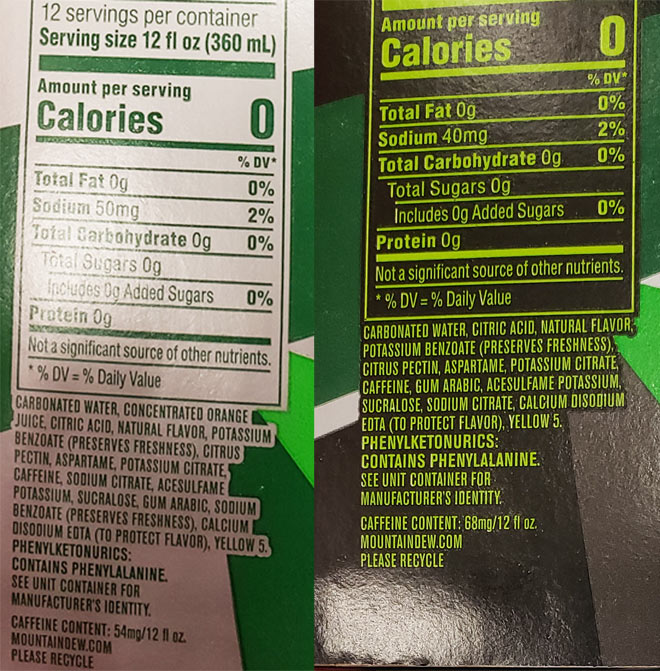
Hidden sugars in drinks are the second trap. That vanilla latte has 20+ grams of sugar. The "keto-friendly" energy drink might have 2 grams of maltodextrin.
Even some sparkling waters sneak in fruit juice concentrate for flavor. Liquids don't fill you up, so the carbs slip past your awareness fast.
"Cheat meals" on weekends wreck more keto runs than anything else. One high-carb meal can knock you out of ketosis for 3 to 7 days, depending on your metabolism. That's a full week of progress gone in one sitting.
The temptation to "save up" carbs for a big meal is real, but it doesn't work the way people hope.
Snacking on nuts is another quiet carb source. A handful of almonds is fine. Half a bag of cashews is not.
Cashews run 9 grams of net carbs per ounce, more than most people realize. Same goes for pistachios. Macadamias and pecans are the safer picks for keto snacking, since they run about 1.5 to 2 grams of net carbs per ounce.
Tracking honestly matters
If you're not tracking, you're guessing. Most apps let you scan barcodes and log food in under a minute. Even a rough estimate keeps you honest about what's actually going in.
For someone rebuilding their daily habits, a smart look at timing kombucha for gut benefits follows the same idea: structure creates results, guesswork creates stalls.
When Sugar Intake Becomes a Health Risk (Diabetes, Medical Keto)
For most healthy adults, a small amount of sugar on keto is a metabolic speed bump. For people with diabetes or those on medically supervised keto, it's a different conversation entirely.
Diabetes and sugar on keto
The American Diabetes Association recognizes low-carb and ketogenic diets as valid options for blood sugar management. That said, anyone with type 1 diabetes needs medical supervision. The risk of diabetic ketoacidosis (DKA) is real, and it's not the same as nutritional ketosis.
DKA happens when blood glucose and ketones both run dangerously high, usually due to insulin deficiency. Nutritional ketosis keeps ketones elevated but glucose stable, often in the 70 to 100 mg/dL range.
If you're on insulin or sulfonylureas, talk to your doctor before cutting carbs sharply. Medication doses often need adjustment within days of starting keto. Going low-carb while still taking the same dose of insulin can cause hypoglycemia, which is its own emergency.
Type 2 diabetes is usually more forgiving. Many people see meaningful drops in fasting glucose and A1C within the first 90 days of strict keto. Sugar intake in this group should stay near zero for the first month, then be tested carefully alongside blood sugar readings.
Therapeutic keto for epilepsy
Children and adults using keto to manage drug-resistant epilepsy follow a much stricter protocol. It's usually a 4:1 or 3:1 ratio of fat to protein and carbs combined, with sugar measured in fractions of a gram. This is medical keto, not a diet choice, and it requires a dietitian's supervision.
Sugar in this context isn't just "limited," it's essentially eliminated.
Eating disorders and keto
Restrictive diets can trigger or worsen eating disorders in vulnerable people. If you have a history of disordered eating, the strict tracking and carb counting of keto can become a slippery slope. Work with a professional who understands both nutrition and mental health.
The National Institutes of Health maintains updated guidance on metabolic therapies and their appropriate use across these conditions.
Quick Reference: Sugar Content of Common Foods
When you're scanning labels or eyeballing portions, having a mental reference helps. Here's how common foods stack up in terms of total sugars per serving.
| Food | Serving Size | Total Sugars | Net Carbs |
|---|---|---|---|
| White sugar | 1 tsp | 4 g | 4 g |
| Honey | 1 tbsp | 17 g | 17 g |
| Maple syrup | 1 tbsp | 12 g | 12 g |
| Whole milk | 1 cup | 12 g | 12 g |
| Plain Greek yogurt | 1 cup | 6 g | 6 g |
| Apple | 1 medium | 19 g | 17 g |
| Raspberries | 1/2 cup | 2.5 g | 2.5 g |
| Blackberries | 1/2 cup | 3.5 g | 3 g |
| Banana | 1 medium | 14 g | 24 g |
| Keto chocolate bar (average) | 1 bar | 2 g | 5 g net |
Notice how much variance there is between whole foods and processed ones. The same serving size can swing from 2.5 grams of sugar to 17, just by changing the source.
Frequently Asked Questions
Can you eat any sugar at all on keto?
Yes, technically. As long as your total daily carbs stay under 20 to 50 grams and your ketones remain elevated, a small amount of sugar fits. In practice, most people find that even occasional sugar stalls progress or triggers cravings.
Treat it as a rare flavor add-in, not a daily allowance.
How much sugar will kick you out of ketosis?
It depends on your metabolism and current state of ketosis. For most people, more than 25 grams of fast-digesting carbs in a single sitting will drop ketone levels for 12 to 48 hours. Smaller amounts (under 10 grams) might be tolerated without fully exiting ketosis, especially if you're fat-adapted.
Does natural sugar count the same as added sugar on keto?
Yes. Both contribute to your daily carb total. The difference is that natural sugars usually come packaged with fiber, water, and micronutrients that slow absorption.
The metabolic effect is similar though, so track both the same way.
Are sugar alcohols safe on keto?
Most are, in moderation. Erythritol and allulose are the cleanest choices with essentially zero blood sugar impact. Maltitol is the one to watch, since it can spike glucose nearly as much as real sugar.
Overdoing sugar alcohols can also cause digestive upset, especially xylitol and sorbitol.
How do I know if I am in ketosis?
The most accurate test is a blood ketone meter reading above 0.5 mmol/L. Breath acetone devices and urine strips work too, but they're less precise. Most people also develop telltale signs: steady energy, reduced hunger, mental clarity, and fewer carb cravings within 2 to 3 weeks.
What is the best keto sweetener for baking?
Erythritol and monk fruit blends are the most common choice for keto baking. Allulose caramelizes like real sugar and is a great option if you can find it. Stevia alone can leave a bitter aftertaste when baked at high temperatures, so it's usually combined with another sweetener.
Can one cheat day ruin a week of keto?
Yes. A high-carb meal can knock you out of ketosis for 2 to 7 days. It's one of the most common reasons progress stalls.
Plan cheat days carefully, not impulsively.
Do I need to count sugar from vegetables?
Yes. Carrots, onions, tomatoes, and squash all contain natural sugars that add up. Track total carbs from every source, including vegetables, until you know your usual daily intake by heart.
Will artificial sweeteners break ketosis?
Most won't spike blood glucose, but they can keep sugar cravings alive. Stevia, monk fruit, and allulose are your safest bets if you need sweetness without the carb load.
The Bottom Line on Sugar and Keto
Sugar on keto is allowed in theory but rarely useful in practice. The 20 to 50 gram daily carb limit leaves very little room for sugar from any source, and most people do better when they treat that room as a buffer rather than an invitation.
Focus on whole foods first: vegetables, quality protein, eggs, cheese, nuts, and seeds. Add berries in small portions when you want something sweet. Use natural sweeteners like erythritol or monk fruit if you need a sugar substitute in recipes.
Track your intake for the first month until you know what a typical day looks like.
If you're managing diabetes, epilepsy, or any chronic condition, work with a healthcare provider before making big changes. Keto is powerful, but it's not one-size-fits-all, and the wrong version of it can do more harm than good.
For most people though, the answer is simple. Less sugar is better, hidden sugar counts, and the ketones don't lie. Stay under your daily carb budget, drink plenty of water, and let the results speak for themselves.
For anyone building broader healthy habits alongside keto, exploring the best teas for kidney health and a thoughtful look at the top nuts for kidney health can round out your routine without adding hidden sugars to the day.