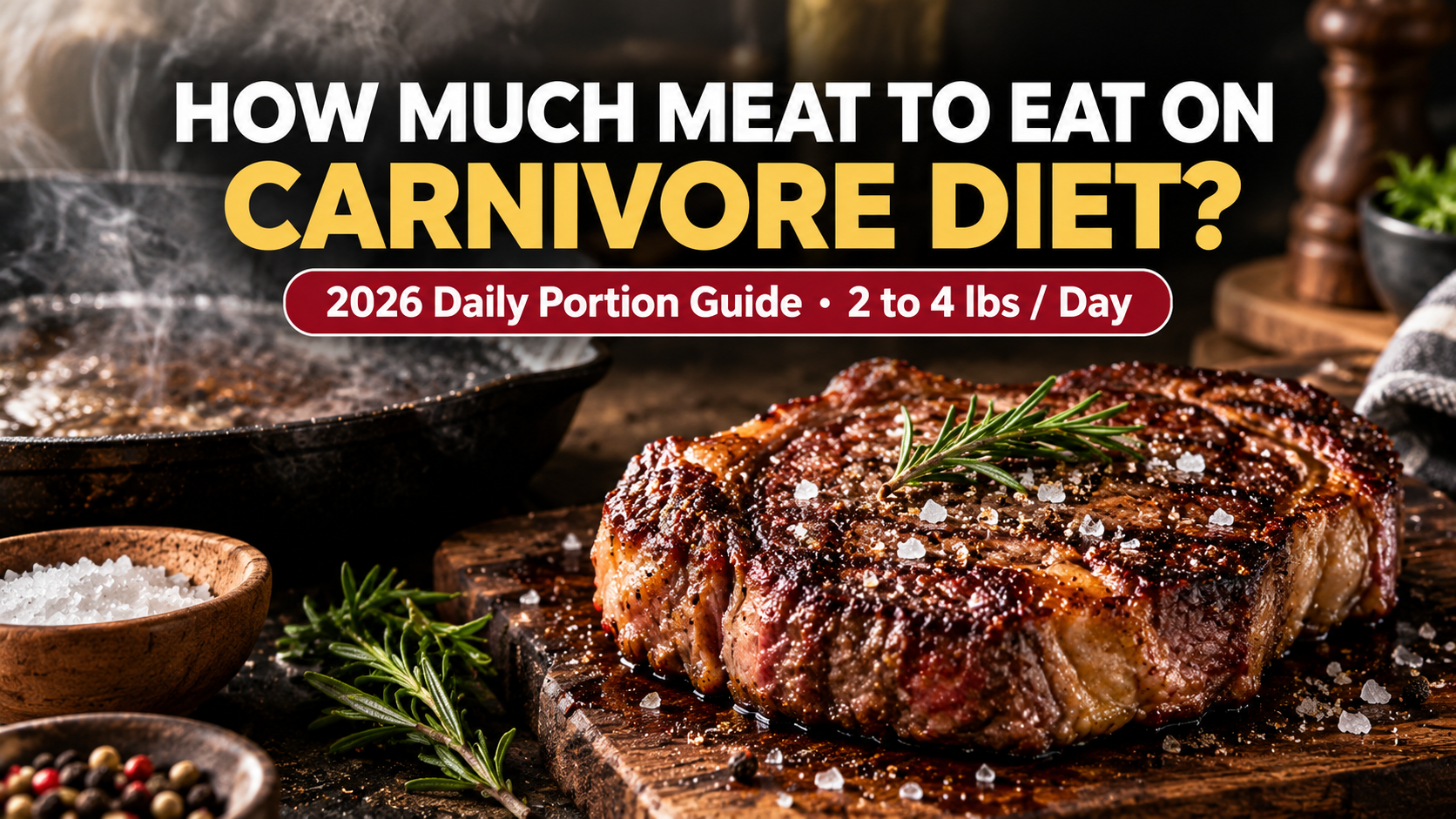
How Much Meat To Eat On Carnivore Diet: Complete 2026 Guide
Most people on a carnivore diet eat between 2 to 4 pounds of meat per day, depending on body size, activity level, and goals. Finding your sweet spot takes a little trial and error, but once you get it right, energy, mood, and digestion tend to fall into place.
If you have ever stared at a pack of ribeyes wondering whether you are eating too much or too little, you are not alone. The carnivore diet strips things back to just animal foods, but figuring out exactly how much meat to eat on a carnivore diet each day is one of the most common questions people ask when they start. I have spent years experimenting with portion sizes, tracking how my body responded, and learning from other long-term carnivores, so let me walk you through everything that actually works in real life, not just theory.
Understanding Daily Meat Intake on the Carnivore Diet
The carnivore diet is simple in theory: you eat animal products and skip everything else. But the amount you eat matters just as much as the food itself. Eat too little and you will feel drained. Eat too much and you may feel sluggish or put on extra fat.
A good starting point is around 1.5 to 2 grams of protein per pound of body weight. For most adults, this lands somewhere between 2 and 4 pounds of meat daily. Men usually need more, especially if they lift weights or have physically demanding jobs. Women often do well on the lower end, around 1.5 to 2.5 pounds.
Your body will tell you when you have found the right amount. The goal is to feel satisfied, energized, and steady throughout the day without constant hunger or heavy fullness.
Factors That Influence How Much Meat You Should Eat
There is no single perfect number that works for everyone. Several things shape your ideal meat intake on a carnivore diet.
Body Weight and Composition
Heavier people naturally need more food. A 250-pound adult will likely eat more meat than someone who weighs 130 pounds. Muscle mass also plays a role since muscle burns more energy even at rest.
Activity Level
A desk worker can get by on less. Someone who trains hard, does manual labor, or walks a lot will need more meat to fuel recovery and performance.
Age and Metabolism
Younger adults often eat more freely. As you age, metabolism shifts and you may find smaller portions work better. Listen to your hunger and energy cues.
Goals
If you want to lose fat, eating slightly less might help. If you are trying to build muscle or maintain weight, eating at the higher end makes more sense.
Current Health
Some people feel better with more fatty cuts. Others do better with leaner meat and added fat. There is no one-size-fits-all, so pay attention to how your body reacts.
How to Calculate Your Ideal Meat Portion
Here is a simple way to estimate how much meat to eat on a carnivore diet without obsessing over numbers.
Step 1: Find Your Protein Target
Multiply your body weight in pounds by 1.5 to 2. This gives you grams of protein per day. For a 180-pound person, that is 270 to 360 grams of protein.
Step 2: Convert Protein to Meat Weight
Since cooked meat has roughly 25 to 30 grams of protein per 100 grams, divide your protein target by 0.3. That gives you roughly 900 to 1200 grams, or 2 to 2.6 pounds of cooked meat.
Step 3: Adjust Based on Fat
Fattier cuts have slightly less protein per ounce. If you eat ribeye, brisket, or 80/20 ground beef, bump your portion up a bit. If you eat chicken breast or lean steak, you can stick to the lower range.
Step 4: Listen to Your Body
After a week or two, your hunger and energy will guide you. If you feel tired or weak, eat more. If you feel heavy or overly full, eat less.
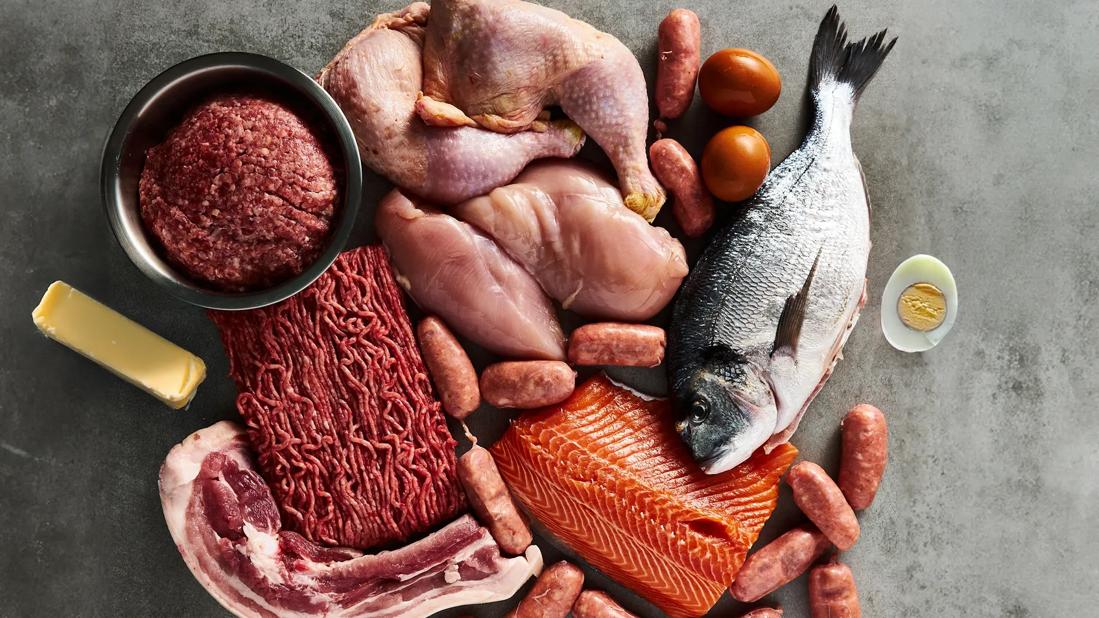
Best Types of Meat for the Carnivore Diet
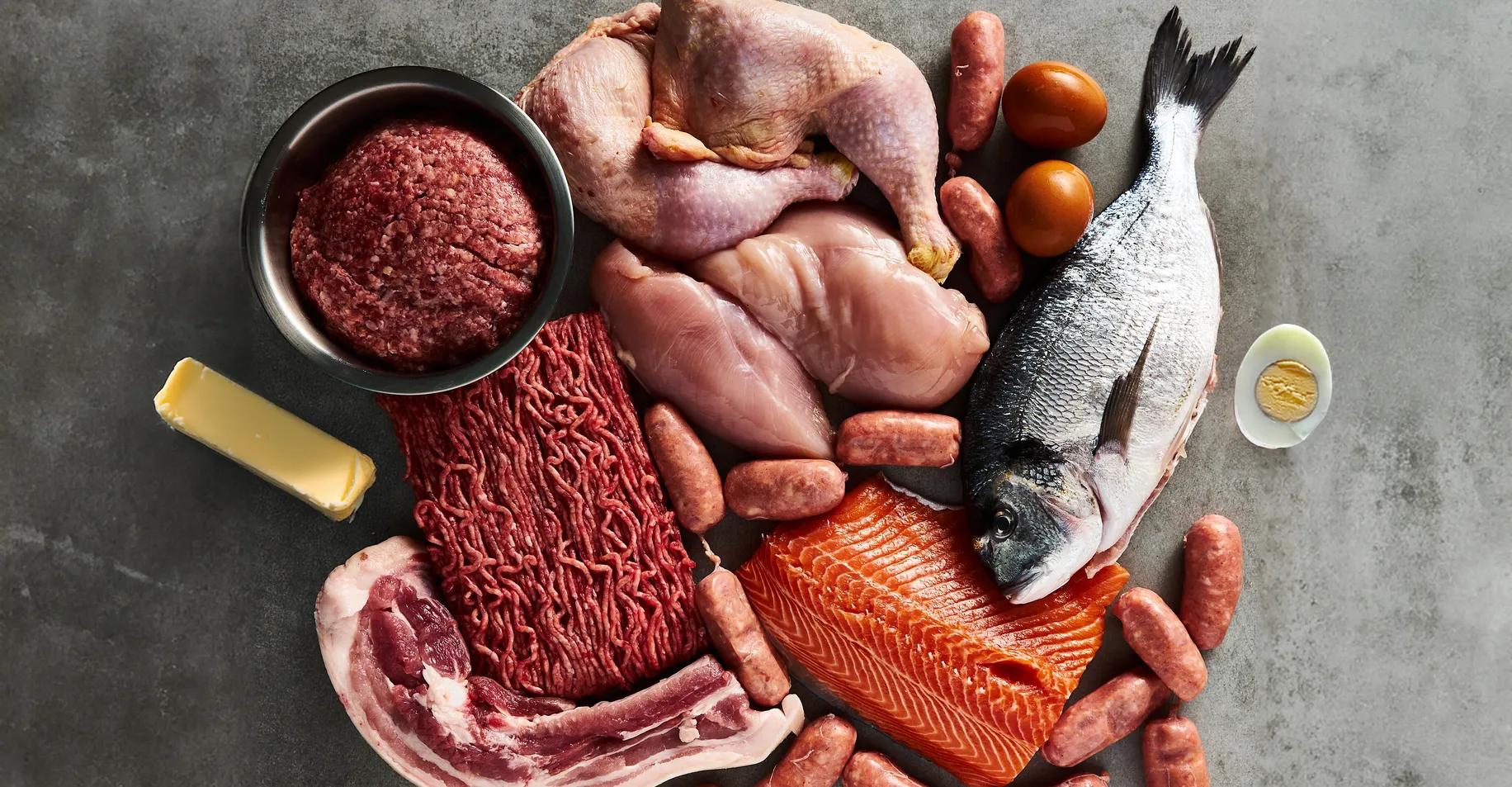
Not all meat is created equal when it comes to nutrition and satisfaction. Here are the most popular options people use on the carnivore diet.
Beef
Ribeye, ground beef, brisket, and steak are staples. They are rich in protein, iron, creatine, and B vitamins. Fatty cuts also give you energy and keep you full longer.
Pork
Pork belly, shoulder, and chops work well. They are versatile and often more affordable than beef.
Poultry
Chicken thighs, wings, and turkey are leaner options. Many people rotate between fattier and leaner cuts to balance their fat intake.
Lamb
Lamb is nutrient-dense and a favorite for those who want variety. It is rich in healthy fats and minerals.
Fish and Seafood
Salmon, sardines, shrimp, and cod are excellent. They bring omega-3s and minerals like iodine and selenium.
Organ Meats
Liver, heart, and bone marrow are nutritional powerhouses. They pack vitamins and minerals that muscle meat alone may miss.
Common Mistakes When Figuring Out Meat Intake
Even experienced carnivores slip up when figuring out portions. Here are mistakes to avoid.
Eating Too Little Protein
Some people focus too much on fat and not enough on protein. This can lead to muscle loss, fatigue, and poor recovery.
Eating Too Much Fat
Fat is important, but it is calorie-dense. If you overdo butter, tallow, or fatty trimmings, you may take in more calories than you need.
Not Drinking Enough Water
Higher protein intake increases your need for water. Dehydration can cause headaches, fatigue, and constipation.
Ignoring Electrolytes
When you cut out carbs, your body flushes out more sodium and potassium. Adding a pinch of salt to your meals or drinking bone broth can help.
Comparing Your Intake to Others
Someone eating 5 pounds a day may be active and larger. Your number will be different, and that is completely fine.

Sample Daily Meat Intake Based on Goals
Here are realistic examples of how much meat to eat on a carnivore diet depending on what you want to achieve.
For Fat Loss
- 1.5 to 2 pounds of cooked meat daily
- Slightly leaner cuts like sirloin or chicken thighs
- Plenty of water and electrolytes
- Stop eating when satisfied, not stuffed
For Maintenance
- 2 to 3 pounds of cooked meat daily
- Mix of fatty and lean cuts
- Balanced fat intake with moderate protein
- Eat when hungry and stop when full
For Muscle Gain
- 3 to 4 pounds of cooked meat daily
- Focus on protein-dense cuts like steak, ground beef, and chicken breast
- Add extra fat through eggs, butter, or ribeye
- Adjust based on training intensity
Signs You Are Eating the Right Amount
Your body sends clear signals when your carnivore diet meat intake is dialed in. Look out for these signs.
- Steady energy throughout the day
- No major crashes after meals
- Restful sleep
- Healthy digestion
- Stable mood
- Gradual progress toward your goal, whether that is fat loss or muscle gain
If these are present, you are likely eating the right amount of meat on the carnivore diet.

Signs You May Need to Adjust Your Intake
Sometimes your intake is off even if you think it is right. Watch for these signs.
- Constant hunger: you may need more food or more fat.
- Heavy fullness after meals: you may be eating too much at once.
- Low energy: could mean too little food or too few electrolytes.
- Weight gain when you do not want it: consider trimming portions slightly.
- Muscle loss: increase protein and ensure you are eating enough.
Tweaking your intake by 10 to 20 percent is usually enough to fix the issue.
How to Track Your Meat Intake Without Stressing
Tracking is helpful early on, but it should not become a burden. Here is how to keep it simple.
- Use a kitchen scale for the first 2 to 3 weeks.
- Estimate portions using your hand as a guide. A palm-sized piece of meat is roughly 3 to 4 ounces.
- Log meals in a simple app if you want to see patterns.
- Stop tracking once you feel confident in your portions.
The goal is to develop an intuitive sense of how much meat to eat on a carnivore diet without needing a calculator.
Expert Tips for Long-Term Success on the Carnivore Diet
After years of fine-tuning my approach and learning from others, here are practical tips that make a real difference.
- Eat until satisfied, not until full.
- Rotate protein sources to avoid nutrient gaps.
- Include organ meats at least once a week.
- Add salt to your meals, especially early on.
- Drink bone broth for extra minerals and hydration.
- Be patient. It takes 4 to 6 weeks for your body to fully adapt.
These small habits help you stay consistent and enjoy the diet long term.
Frequently Asked Questions
How many grams of meat should I eat per meal on the carnivore diet?
Most people eat between 200 and 400 grams of cooked meat per meal. This gives you around 50 to 120 grams of protein depending on the cut. Adjust based on your hunger and daily goals.
Is 2 pounds of meat a day enough on the carnivore diet?
For many people, 2 pounds of meat a day is a solid starting point. Smaller women may only need this much, while larger or more active individuals may need 3 to 4 pounds.
Can you eat too much meat on the carnivore diet?
Yes, eating too much can lead to unnecessary calorie intake, sluggishness, and weight gain. The key is eating enough to feel satisfied without going overboard.
Should I count calories on the carnivore diet?
Counting calories is helpful for the first few weeks but not necessary long term. Focus on eating to satisfaction and adjusting portions based on your goals and energy levels.
What is the best meat ratio for fat loss on carnivore?
Aim for about 70 to 80 percent lean meat and 20 to 30 percent fat. This keeps protein high while still giving you enough energy and satisfaction to stay on track.
How long does it take to feel full on the carnivore diet?
It usually takes 2 to 4 weeks for your appetite to regulate. After that, most people naturally settle into a consistent intake that supports their goals without constant tracking.
Conclusion
Figuring out how much meat to eat on the carnivore diet does not have to be complicated. Start with 2 to 4 pounds of meat per day, adjust based on your body, and pay attention to how you feel. Within a few weeks, your hunger and energy will guide you toward the perfect portion size for your goals.
The carnivore diet works best when you treat it as a long-term lifestyle rather than a quick fix. Listen to your body, stay consistent, and tweak your intake as needed. If you found this guide helpful, drop a comment with your experience or share it with someone who is starting their carnivore journey.