How Many Calories Should I Eat On The Carnivore Diet: Complete 2026 Guide
Most men eat 2,000 to 3,000 calories daily on the carnivore diet, while women typically consume 1,400 to 2,200 calories depending on activity level, body composition, and metabolic health.
If you've been wondering how to figure out your perfect calorie target on an all-meat diet, you're not alone. After coaching hundreds of people through carnivore transitions, I can tell you that calorie needs on this diet are often different from what people expect. The high satiety of animal foods, the thermic effect of protein, and the metabolic shifts that happen when you remove carbs all play a role in determining your ideal intake. Let me walk you through everything you need to know to find your sweet spot.

Understanding Calorie Needs on the Carnivore Diet
Calories are units of energy your body uses for everything from breathing to building muscle, and on the carnivore diet, where you're eating only animal products, your calorie needs shift in interesting ways. Protein becomes the primary fuel source alongside fat, and this changes how your body processes and uses energy throughout the day.
The carnivore diet is unique because it eliminates all plant foods, leaving you with meat, fish, eggs, and animal fats as your only options. This isn't just a low-carb diet; it's a zero-carb approach that forces your body into a very specific metabolic state. When you remove fiber, sugars, and starches, your insulin levels drop, your body becomes more efficient at burning fat for fuel, and your appetite signals often recalibrate in ways that can surprise you.
Your total daily energy expenditure (TDEE) is the number of calories your body burns in a day, and it includes your basal metabolic rate (the calories you burn at rest) plus the calories you burn through movement, exercise, and digestion. On a standard diet, TDEE calculations use formulas that account for moderate carbohydrate intake. But on carnivore, the thermic effect of protein is much higher, meaning your body burns more calories simply digesting the food you eat. Protein uses roughly 20 to 30 percent of its calories just to be processed, while carbs use about 6 to 8 percent and fats use 0 to 3 percent. This means you might actually be burning more energy at rest than you would on a higher-carb diet with the same calorie count.
Understanding this distinction is crucial because many people who switch to carnivore notice they can eat more food without gaining weight, or they lose weight while eating what seems like a lot of calories. It's not magic; it's just a different metabolic reality.
Calculating Your Baseline Calorie Needs
Before you can figure out how many calories to eat on the carnivore diet, you need to know your baseline. This gives you a starting point that you can adjust based on your goals, whether that's losing fat, building muscle, or maintaining your current weight.
The Mifflin-St Jeor Equation
The most accurate formula for most people is the Mifflin-St Jeor equation. For men, you multiply your weight in kilograms by 10, add your height in centimeters times 6.25, subtract your age times 5, and then add 5. For women, the calculation is the same except you subtract 161 at the end. This gives you your basal metabolic rate, or BMR.
Once you have your BMR, you multiply it by an activity factor. If you're sedentary (little to no exercise), use 1.2. If you're lightly active (light exercise 1 to 3 days a week), use 1.375. If you're moderately active (moderate exercise 3 to 5 days a week), use 1.55. If you're very active (hard exercise 6 to 7 days a week), use 1.725. And if you're extra active (very hard exercise and a physical job), use 1.9.
This gives you your TDEE, which is a solid starting point for figuring out how many calories you should eat.
Activity Level Adjustments
Here's where things get interesting on carnivore. Many people find that their energy levels increase significantly in the first few weeks of the diet, which can lead to more spontaneous movement. You might find yourself walking more, fidgeting more, or just feeling more motivated to move. This is called NEAT, or non-exercise activity thermogenesis, and it can add a surprising number of calories to your daily burn.
I remember when I first went carnivore, I was shocked at how much I wanted to move. I started taking the stairs without thinking, pacing while on phone calls, and even just feeling restless if I sat too long. All of that added up, and it meant my actual calorie needs were higher than the formula suggested.
If you're new to carnivore, I'd recommend tracking your food for the first two to four weeks to get a sense of your intake, and then paying attention to how your body responds. Are you losing weight when you don't want to? Eat more. Gaining weight when you don't want to? Eat a bit less. Feeling energized and maintaining? You've found your sweet spot.
Calorie Recommendations by Goal
Your calorie target on the carnivore diet should align with what you're trying to achieve. Let's break it down by common goals.
For Fat Loss
If your goal is to lose body fat, you need to eat fewer calories than you burn, but not so few that you lose muscle or tank your energy. On carnivore, a moderate deficit of about 15 to 25 percent below your TDEE works well for most people. This might look like 1,800 to 2,400 calories per day for a moderately active man, or 1,200 to 1,600 calories per day for a moderately active woman.
One thing I always tell people is not to slash calories too aggressively on carnivore. Because the diet is so satiating, many people find they can lose fat while eating a surprisingly high amount of food. I had a client who was eating 2,200 calories a day and losing two pounds a week, simply because the protein kept her full and her body was using so much energy to process all that meat. The deficit doesn't have to be extreme to work.
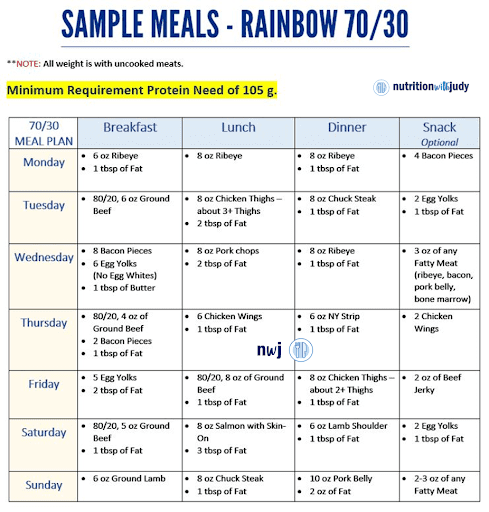
Also, keep your protein high (around 0.8 to 1 gram per pound of body weight) to preserve muscle mass, and let your fat intake fill in the rest of your calories. This is where carnivore shines compared to other diets; you can eat ribeye steak and eggs and still be in a fat-loss phase without feeling deprived.
For Muscle Gain
If you're trying to build muscle, you'll need a calorie surplus of about 10 to 20 percent above your TDEE. For most active men, this means 2,500 to 3,500 calories per day, and for active women, it means 1,800 to 2,500 calories per day.
On carnivore, getting enough calories to build muscle can actually be a challenge for some people. Meat is dense and satiating, and eating four to five pounds of beef a day can feel like a lot of work. I remember struggling with this when I was trying to bulk on carnivore. I'd stare at a plate of steak and just not want to eat another bite, even though I knew I needed more fuel for growth.
To make it easier, focus on calorie-dense cuts of meat like ribeye, pork belly, and lamb. Add butter to your steaks, eat the fattier ground beef, and don't be afraid of egg yolks. You can also drink bone broth with added fat between meals if you're really struggling to hit your numbers.
For Maintenance
If you're happy with your current body composition and just want to maintain, eat right around your TDEE. This is where most people end up once they've spent some time on the diet and learned to listen to their hunger signals.
The beauty of carnivore is that it often makes intuitive eating easier. Without the blood sugar spikes and crashes that come from carbs, your hunger becomes more steady and predictable. Many people find they naturally settle into a pattern of eating when hungry and stopping when satisfied, without having to count every calorie.
Factors That Affect Your Calorie Needs on Carnivore
Several variables influence how many calories you need, and understanding them can help you fine-tune your intake.
Body Size and Composition
The more you weigh and the more muscle you carry, the more calories you burn at rest. Muscle tissue is metabolically active, meaning it requires more energy to maintain than fat tissue. This is why two people of the same weight can have very different calorie needs; the one with more muscle will need more food.
This is something I've seen over and over with my clients. A 180-pound person with 15 percent body fat will need significantly more calories than a 180-pound person with 30 percent body fat, even if they look similar in clothes.
Age and Gender
Men generally need more calories than women due to higher muscle mass and different hormonal profiles. As you age, your metabolism naturally slows down, partly because of muscle loss and partly because of changes in hormone levels. A 25-year-old man might need 2,800 calories to maintain his weight, while a 55-year-old man might need 2,400 calories for the same result.
Women also experience monthly fluctuations in calorie needs due to their menstrual cycle. During the luteal phase (the week or two before your period), your basal metabolic rate increases slightly, and you might find yourself naturally hungrier. Honoring that hunger is important; your body is asking for more fuel for a reason.
Activity Level and Exercise
Obviously, the more you move, the more calories you need. But the type of movement matters too. Strength training creates a larger metabolic disturbance than steady-state cardio, and your body continues to burn extra calories for hours or even days after a tough lifting session.
On carnivore, many people find they recover faster from workouts and can train harder. I noticed this in my own training. I was able to add weight to my lifts more consistently, and I wasn't as sore the next day. This meant I could train more frequently, which increased my overall calorie needs.
Metabolic Adaptation
If you've been on a long-term calorie deficit, your metabolism may have adapted and slowed down. This is sometimes called metabolic damage or adaptive thermogenesis, and it can make calorie calculations tricky. If you've been undereating for months, your actual TDEE might be lower than the formulas suggest, and you might need to reverse diet (gradually increase calories) to bring your metabolism back to normal.
Carnivore can actually help with this. The high protein intake supports muscle maintenance, the satiety prevents overeating, and the stable blood sugar helps regulate hunger hormones like leptin and ghrelin. Many people who come to carnivore after years of yo-yo dieting find that their metabolism starts functioning normally again within a few months.
Common Mistakes When Counting Calories on Carnivore
Counting calories on a carnivore diet isn't always straightforward, and there are some pitfalls you'll want to avoid.
Not Eating Enough Fat
Many people who are used to high-protein, low-fat diets carry over that mindset to carnivore and don't eat enough fat. But on this diet, fat is a primary fuel source, and if you're not eating enough of it, you'll feel tired, hungry, and irritable. Fat also helps with the absorption of fat-soluble vitamins (A, D, E, and K), which are abundant in animal foods.
If you're eating chicken breasts and egg whites, you're doing carnivore wrong. Opt for fattier cuts of meat, leave the skin on your poultry, and don't trim the fat from your steaks. This will also help you feel more satisfied and keep your energy levels stable.
Overcomplicating Macros
While some people thrive on tracking every gram of protein, fat, and carbs, others find it stressful and unsustainable. The carnivore diet is simple by nature, and most people do just fine without obsessing over perfect macros. As long as you're eating enough protein, getting adequate fat, and listening to your hunger cues, you'll likely find a good balance naturally.
I went through phases of meticulous tracking and phases of just eating intuitively, and both worked. The tracking helped me learn what a proper portion looked like, but eventually I didn't need it anymore. Don't let the pursuit of perfect numbers ruin the simplicity that makes this diet so appealing.
Ignoring Hunger Signals
One of the biggest mistakes I see is people forcing themselves to eat a specific calorie target even when they're not hungry, or restricting when they're starving. On carnivore, your hunger signals are usually reliable, especially once you've adapted. If you're truly hungry, eat. If you're not, don't force it.
This might mean one day you eat 2,500 calories and the next you eat 1,800. That's okay. Your body knows what it needs, and learning to trust that is one of the most valuable skills you can develop on this diet.
Not Adjusting for Changes
Your calorie needs aren't static. They change with your activity level, your sleep, your stress, and even the season. A person who lifts heavy in the winter and does more walking in the summer will have different calorie needs at different times of the year. Pay attention to these shifts and adjust accordingly.

Practical Tips for Hitting Your Calorie Goals
Here are some tried-and-true strategies for making sure you're eating the right amount on carnivore.
Meal Frequency
Some people do great with one or two meals a day (OMAD or OMAD+1), while others prefer three or four smaller meals. There's no right or wrong here; it depends on your schedule, your hunger patterns, and your goals. If you're trying to eat a lot of calories, smaller, more frequent meals might work better. If you're trying to eat less or practice time-restricted eating, fewer meals might be the way to go.
When I was bulking, I ate four times a day because I physically couldn't eat enough in two meals. When I'm maintaining, I usually eat two meals and sometimes just one. Listen to your body and your schedule.
Calorie-Dense Foods
To increase calories without increasing volume, focus on calorie-dense foods. Ribeye steak has about 900 calories per pound, while chicken breast has around 550. Pork belly is even higher, with about 1,200 calories per pound. Adding butter or ghee to your meals can also boost calories quickly.
If you're trying to lose weight, you might do the opposite. Choose leaner cuts like sirloin, chicken thighs (still fattier than breasts), and fish. But even then, don't go too low-fat; you'll just end up hungry and miserable.
Preparation Methods
How you prepare your meat can affect both the calorie count and how much you enjoy eating it. Slow-cooked brisket, reverse-seared ribeye, and crispy pork belly are all calorie-dense and delicious. On the flip side, a dry chicken breast is neither calorie-dense nor particularly exciting. Invest in learning to cook meat well; it makes hitting your targets so much easier.
I spent years eating bland, overcooked meat because I didn't know how to cook it properly. Once I learned basic techniques like reverse searing, using a meat thermometer, and rendering fat properly, I looked forward to every meal and found it much easier to eat enough.
Tracking When Needed
If you have specific goals (losing a certain amount of fat, gaining a certain amount of muscle), tracking your food for a period can be helpful. Use a food tracking app and a good kitchen scale for the first few weeks to get a sense of portion sizes and calorie counts. After that, most people can estimate accurately enough without tracking.
Don't make tracking a permanent lifestyle, though. The goal is to develop the skills and awareness to eat intuitively while still making progress toward your goals.
Sample Calorie Targets for Different People
To give you a clearer picture, here are some example calorie targets for different types of people on the carnivore diet.
Sedentary Woman (30s, 150 lbs)
Maintenance: around 1,600 to 1,800 calories per day. Fat loss: around 1,200 to 1,500 calories per day. This assumes a desk job with minimal exercise. Walking 8,000 to 10,000 steps a day would add about 200 to 300 calories to these numbers.
Moderately Active Man (30s, 180 lbs)
Maintenance: around 2,500 to 2,800 calories per day. Fat loss: around 2,000 to 2,300 calories per day. This assumes lifting weights 3 to 4 times a week and some daily activity.
Very Active Man (20s, 200 lbs)
Maintenance: around 3,200 to 3,500 calories per day. Muscle gain: around 3,500 to 4,000 calories per day. This assumes intense training 5 to 6 days a week and a physical job or lots of daily movement.
Post-Weight Loss Maintenance (Any Gender)
Once you've reached your goal weight, gradually increase calories to your new maintenance level. Add 100 to 200 calories per week until you find the level where your weight is stable. This reverse dieting process helps prevent rapid regain and gives your metabolism time to adjust.
How to Know If You're Eating the Right Amount
Numbers are useful, but your body gives you the most accurate feedback. Here are some signs that you're eating the right amount on carnivore.
Signs You're Eating Enough
You have stable energy throughout the day without crashes. You're not constantly thinking about food. You sleep well and wake up rested. Your workouts feel strong. Your mood is stable. Your hair, skin, and nails look healthy. For women, your menstrual cycle is regular.
Signs You Might Be Eating Too Much
You're consistently gaining weight and don't want to. You feel sluggish after meals. You're eating out of boredom rather than hunger. You're forcing yourself to finish food when you're already full.
Signs You Might Be Eating Too Little
You're constantly hungry or thinking about food. You feel cold all the time. Your workouts are suffering. Your hair is falling out. You're losing muscle rather than fat. Your mood is irritable or down. For women, your period has stopped or become irregular.
If any of these signs show up, adjust your calories accordingly. The diet is meant to serve you, not the other way around.
Special Considerations
Some situations require extra attention to calorie intake.
During the Adaptation Phase
The first few weeks of carnivore can be challenging. Your body is switching from using glucose to using fat and ketones for fuel, and this transition can bring fatigue, brain fog, and cravings. During this time, don't restrict calories. Eat as much as you need to feel satisfied. Once you're fully fat-adapted (usually 4 to 6 weeks), you can start fine-tuning your intake based on your goals.
For Thyroid Health
Severe calorie restriction can negatively impact thyroid function, which slows down your metabolism and makes weight loss harder. If you have thyroid issues or are concerned about thyroid health, avoid very low-calorie diets and make sure you're eating enough to support healthy hormone production.
For Hormonal Balance
Women, in particular, need to be careful not to undereat. Low calorie intake can disrupt reproductive hormones, leading to missed periods, worsened PMS, and other issues. If you're a woman experiencing these symptoms, try increasing your calories (especially from fat) and see if things improve.
During Stress or Poor Sleep
Stress and lack of sleep both increase your calorie needs slightly, but they also make it harder to stick to any plan. During these times, focus on eating enough to feel good and don't worry about precise calorie targets. Your body needs support, not restriction.
Long-Term Sustainability
The carnivore diet works best when it's sustainable, and obsessing over calories isn't sustainable for most people. Once you've reached your goal weight or body composition, transition to a more intuitive approach. Continue to eat primarily animal foods, pay attention to your hunger and fullness cues, and adjust your intake based on your activity level and goals.
The people who thrive long-term on carnivore are the ones who use it as a framework for eating well rather than a strict set of rules. They learn to listen to their bodies, they don't fear food, and they understand that the diet is a tool to help them feel and perform their best, not a prison of restriction.
I think that's the most important thing I can share with you. The calorie numbers are just a starting point. The real skill is learning to eat in a way that supports your health, your goals, and your quality of life. Carnivore makes that easier for many people, but it's still a skill that takes time to develop.
Frequently Asked Questions
How do I calculate my maintenance calories on the carnivore diet?
Use the Mifflin-St Jeor equation to find your BMR, then multiply by your activity factor (1.2 for sedentary, 1.55 for moderately active, etc.) to get your TDEE. This is a solid starting point, but adjust based on real-world results over 2 to 4 weeks.
Do I need to eat more calories on carnivore than other diets?
You might need slightly more calories due to the thermic effect of protein, but you also tend to feel fuller on fewer calories. Many people find their calorie intake naturally decreases without hunger, while others need to eat more to support activity. It varies by individual.
Can I lose weight on carnivore without counting calories?
Yes, many people lose weight without counting because the diet is so satiating and naturally regulates appetite. However, if you're not seeing results after a few months, tracking for a few weeks can help you identify hidden calorie issues or portion sizes you're not accounting for.
What happens if I eat too few calories on carnivore?
You might experience fatigue, hair loss, muscle loss, hormonal disruptions (especially in women), and a slowed metabolism. It's important to eat enough to support your body's basic functions, even when trying to lose fat.
Should I eat back the calories I burn during exercise?
Generally, yes, especially if you're strength training. Your body needs fuel to recover and build muscle. If you have fat to lose, you can eat back about half of your exercise calories. If you're lean, eat back all of them or even more.
Conclusion
Finding your ideal calorie intake on the carnivore diet comes down to understanding your body, your goals, and your activity level. Start with a calculated TDEE, adjust based on real-world results, and pay attention to the signals your body sends you. Whether you're eating 1,500 calories or 3,500 calories, what matters most is that you're nourishing yourself properly, feeling good, and making progress toward your goals.
The numbers are useful tools, but they're not the whole picture. Give yourself time to adapt to the diet, learn your hunger cues, and don't be afraid to adjust as needed. Your body is smarter than any formula, and the more you learn to trust it, the easier this entire process becomes. If you have questions or want to share your own carnivore journey, drop a comment below; I'd love to hear from you.